

Seed germination pellet basics: size, water, timing
Seed germination pellets are compressed plugs of peat or coir—sometimes held in a thin net—that expand in water to form a small growing module for starting a seed. A typical 30–36 mm pellet takes up roughly 5–7 times its dry weight in water and is ready to sow in about 5–15 minutes, while germination then runs from about 7 to 21 days at 18–24°C for many common vegetables and flowers. The same phrase is occasionally used for pelleted seed, where a seed is coated with clay or another material to make small seed easier to handle; that is a seed treatment, not a growing pellet.
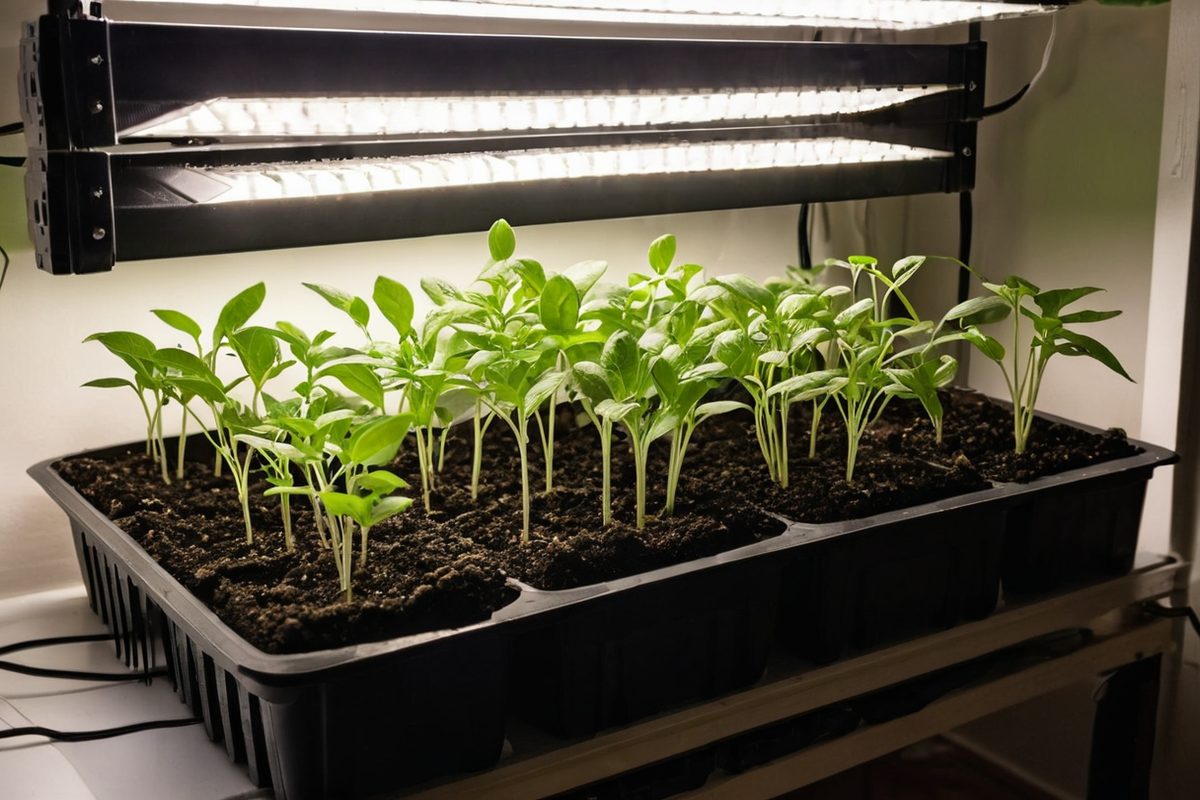
The pellet size and water timing detail most miss
The detail most people miss is that a germination pellet is a short-term root module, not a pot. Its mesh and small volume are sized for the first two to four weeks after sowing; once roots reach the edge, the pellet can restrict them, and transplant shock rises if the mesh is torn or the root ball is left too long. A 30 mm pellet is usually enough for tomato, pepper, lettuce, and many herbs until the first or second true leaf, but it is not a place to grow a plant to sale size.
Watering is the second blind spot. Dry peat and coir can be hydrophobic, so water poured over the top may run down one side and leave the core dry. Setting pellets in a tray and adding warm water—about 20–25°C—usually gives more even expansion; coir often needs 10–15 minutes, while peat may finish in 5–10. Drain any standing water after expansion. Do not squeeze the pellet to speed things up: squeezing compresses the air pores that roots need. If the pellet has a net, check that it is intact but not tight enough to girdle the stem.
Medium choice also matters more than many gardeners expect. Peat pellets tend to be acidic, often around pH 3.5–4.5 unless buffered, while coir pellets commonly sit nearer pH 5.5–6.5. Most seeds germinate across a wider pH range than that, but the difference becomes visible when seedlings sit in the pellet for weeks and start relying on the medium for nutrients. For coated or pelleted seed rather than growing pellets, the seed coating formulations guide covers how coatings change sowing and moisture management.
Worked example: one seed pellet watering schedule
Take 100 tomato seeds and 36 mm coir pellets. For reference, assume each dry pellet weighs about 10 g and holds roughly 60 mL of water after full expansion; 100 pellets therefore need about 6 L of water, plus a little for top-up. Two standard 10 × 20 trays, each holding 50 pellets in a 5 × 10 layout, keep the work contained. Add warm water to the tray, let the pellets expand for 10–15 minutes, then tip off the excess.
Sow one seed per pellet at about 6 mm deep—roughly two to three times the seed diameter. Tomato seed does not need light to germinate, but it does need warmth: hold the trays at 21–24°C for the first week. A humidity dome helps keep the pellet surface moist until emergence; remove it when about half the seedlings are up, because stagnant humid air encourages mold. At 21–24°C, emergence typically starts in 6–10 days; at 18°C, expect closer to 10–14 days.
After emergence, move the trays to 18–21°C and good light. Coir has little nutrient charge, so start a quarter-strength balanced feed at the first true leaf if the seedlings look pale. Transplant when two true leaves have formed, usually 14–21 days after sowing, before roots matte the net. If the same run uses pelleted seed instead of growing pellets, sow the coated seed dry and follow the supplier’s moisture advice; some coatings become sticky if soaked too long.
Where pellet size and water timing break down
Pellets are a poor fit for crops that resent root disturbance. Carrots, parsnips, and other long-taproot species usually direct-sow better; a 30–36 mm pellet can deflect or constrict the taproot before transplant. Very fine seed, such as some herbs and begonias, can also be awkward: the pellet surface dries quickly, and a heavy watering can bury the seed or move it to the edge. Seeds that need light to germinate should be pressed onto the surface, not covered, and that conflicts with the usual “water from above” habit.
Long-germinating or cold-requiring seeds expose another limit. If a species needs 4–12 weeks of stratification, a moist pellet can grow algae or mold before the seed ever breaks dormancy. In that case, use a controlled cold-moisture bag or a plug system that can be monitored, rather than a tray of pellets. At commercial scale, labor and cost also shift the decision: pellets are convenient for small batches and retail kits, while rigid plug trays often make more sense for tens of thousands of plants because they handle automation and root pruning more predictably.
Water quality is a quieter failure point. High-salinity irrigation water can draw moisture out of a small pellet faster than from a larger container, and chlorine or high bicarbonate levels may affect sensitive species. For a broader look at water and media management, see the irrigation and soil management hub. Finally, “seed balls” and clay-coated seed pellets are not the same product as a growing pellet; they are usually broadcast and rely on rainfall, so they germinate on a different schedule and with much less control.
Check your seed germination pellet setup
Before buying seed germination pellets, separate the product type first: a compressed growing pellet, a pelleted seed, and a clay seed ball solve different problems. The table below gives typical reference ranges, not fixed specifications.
| Product | Typical size / form | Water behavior | pH range (typical) | Good fit | Watch-out |
|---|---|---|---|---|---|
| Peat germination pellet | 30–42 mm disc or plug, netted | Expands; often 5–7× dry weight | 3.5–4.5, unless buffered | Small batches, acid-tolerant seedlings | Can dry unevenly; acidic if unbuffered |
| Coir germination pellet | 30–42 mm disc or plug, netted | Expands; often 6–8× dry weight | 5.5–6.5 | Most vegetables and herbs | Low nutrient charge; needs feed later |
| Rockwool cube | 25–40 mm cube | Absorbs but does not expand | About 5.5–6.5 after conditioning | Hydroponics and uniform propagation | Dust; must manage moisture closely |
| Soil block | 30–50 mm block, no net | Holds together when watered | Depends on mix | Plastic-free propagation | Needs a binder and careful watering |
| Pelleted seed | Seed coated to 2–4× raw size | Coating breaks down after sowing | Not a medium | Precision sowing of small seed | Do not over-soak; check coating type |
- Confirm what you have. Check whether the pack says growing pellet, pelleted seed, or seed ball; the sowing method and water rules differ.
- Match diameter to crop. For reference, 20–24 mm suits tiny herbs and small flowers, 30–36 mm suits tomato, pepper, and lettuce, and 42 mm suits fast-growing plugs that will be moved on quickly.
- Test one pellet before a full tray. Weigh it dry, add a measured amount of water, wait 10–15 minutes, then cut it open to see whether the core is evenly moist.
- Check the net and binder. A net should stay intact when wet without splitting; loose medium or a torn net usually means more handling loss at transplant.
- Set a water routine. Warm water, full expansion, then drain. Never leave pellets standing in water for long periods, and avoid squeezing them.
- Control temperature and airflow. Use 20–24°C for warm-season crops and 15–18°C for cool-season crops; remove domes once emergence is underway. For home-scale tray and lighting detail, the home gardening propagation guide is a useful next step.
- Plan the transplant window. Move seedlings before roots matte the net—often 2–4 weeks after sowing for common vegetables—and open or remove the net if roots are circling.
- For commercial orders, ask for lot data. Request pellet diameter tolerance, dry weight, expansion volume, pH, moisture content, net type, shelf life, and pack count so a sample trial matches production.
Are seed germination pellets the same as peat pots?
No. A peat pot is a container with walls; a germination pellet is compressed medium that expands into a plug, usually held by a thin net. The pellet is meant for a shorter window, and the net should be opened or removed before transplant if roots are circling.
Do seedlings in pellets need fertilizer straight away?
Usually not before the first true leaves. Peat and coir pellets carry little or no nutrient charge; once cotyledons are open and the first true leaf appears, a quarter-strength balanced feed every second watering is a common starting point. Watch for pale lower leaves as the cue to begin.
Can I use seed germination pellets for carrots or parsnips?
They are generally a poor match. Long taproots can be constricted by a 30–36 mm pellet and resent transplant. Direct sowing into the final soil is more reliable for these crops; use pellets for species that tolerate root disturbance, such as tomatoes, peppers, lettuce, and many herbs.
If you are sourcing seed germination pellets for a retail or farm-supply program, send the target diameter, medium (peat or coir), expansion volume, net type, pH range, moisture content, and pack format; a small sample trial with your main crop is usually the fastest way to confirm whether a lot behaves consistently.