

Container gardening vegetables succeeds when three things match the crop: a pot large enough for the root system (about 5 L for a lettuce, 20–30 L for a tomato), a free-draining soilless mix instead of garden soil, and a watering routine that replaces what the plant transpires — commonly 1–3 litres per fruiting plant per day in midsummer. Get those three right and most salad crops are harvestable 30–60 days from sowing, with fruiting crops following at 70–110 days.
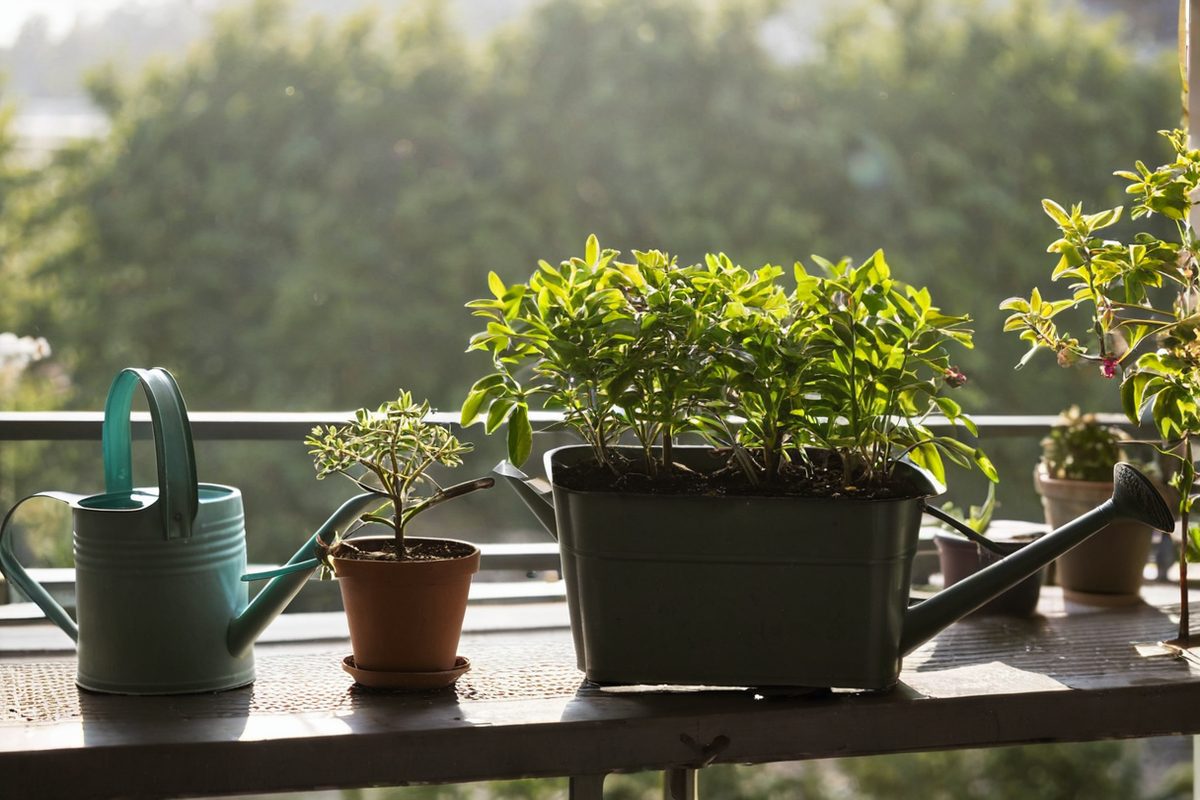
How container vegetable growing actually works
A container is a closed root zone. Everything the plant drinks and eats has to be inside that volume, or arrive from your hand. That single fact explains a lot of container failures: the pot is a fixed reservoir of water and nutrients, and once it empties, growth stops within hours rather than days.
Root volume sets the ceiling on plant size. A stunted root system cannot carry a heavy fruit load, which is why a cherry tomato in a 5 L pot will flower and then abort most of its fruit, while the same variety in a 25 L pot crops for months. Shoot growth roughly tracks root exploration in the early weeks; a transplant that fills its pot by week three is on track.
Oxygen is the second constraint. Roots respire and need air pockets in the mix. A substrate that stays saturated loses those pockets, and roots suffocate or rot — sometimes within 48 hours in warm weather. Drainage holes are not a formality; they are the mechanism that lets air follow water back into the profile.
Temperature is the third. Mix in a 10 L black pot on a sunny patio can run 5–8 °C warmer than garden soil at the same air temperature, and root zones above roughly 30 °C begin shutting down water uptake. Light-coloured pots, shading the pot body, or double-potting all help.
What the numbers mean
In container gardening vegetables, the figures that decide the outcome are volume, depth, light hours and litres per day. Volume and depth are quoted separately because they solve different problems: volume sets the water and nutrient buffer, depth sets whether the root system can develop its natural shape. A carrot in 20 cm of mix forks and stops; the same carrot in 30 cm grows straight.
| Crop | Minimum volume per plant | Useful depth | Spacing | Typical days to harvest |
|---|---|---|---|---|
| Lettuce, spinach, rocket | 4–7 L | 15–20 cm | 15–20 cm | 30–50 |
| Radish, spring onion | 3–5 L | 15 cm | 8–10 cm | 25–35 |
| Bush bean, pea | 10–15 L | 25 cm | 15–20 cm | 55–70 |
| Pepper, chilli | 15–20 L | 30 cm | 30–40 cm | 80–110 |
| Determinate tomato | 25–40 L | 35–40 cm | 40 cm | 90–110 |
| Cherry tomato (indeterminate) | 20–30 L | 35 cm | 40–50 cm | 70–90 |
| Carrot, maincrop type | 10–15 L | 30 cm | 5–8 cm | 70–90 |
| Potato, early variety | 20–30 L | 30 cm | 1 per pot | 70–90 |
Figures are for reference; variety and climate shift them by a couple of weeks either way.
Water numbers are the ones growers underestimate. A mature tomato or cucumber in a 25 L pot can move 2–4 L on a hot, breezy day, while a 25 L mix holds perhaps 12–15 L at field capacity — and only part of that is plant-available. That is why a midsummer container can go from fine to wilted in one afternoon, and why a saucer of standing water is no substitute for a proper soak.
Light is the other headline figure. Fruiting vegetables generally want 6–8 hours of direct sun; leafy crops produce acceptably on 4–6. Below about four hours, plants stretch, flower poorly, and you harvest mostly leaves.
Feeding is measured by concentration, not scoops. Soluble fertiliser at roughly 100–150 ppm nitrogen, applied weekly, keeps most container vegetables on track once established. Controlled-release granules are dosed by volume — typically 3–5 g per litre of mix, giving three to four months of release and running faster in hot weather.
Water-retention amendments change how forgiving the whole system is. Super-absorbent polymer granules are typically dosed at 1–2 g per litre and blended through the root zone rather than sprinkled on the surface; the super absorbent polymer formulations used in horticulture are usually cross-linked acrylic polymers that absorb and re-release water over repeated cycles, though absorbency typically drops in fertiliser-rich solutions.
| Amendment | Typical dose | What it does | Watch out for |
|---|---|---|---|
| Perlite | 10–20% by volume | Drainage and air pockets | Floats during watering; dusty when dry |
| Coir | 20–30% by volume | Holds water, rewets easily | Rinse to remove excess salts |
| Compost | 20–30% by volume | Nutrients and pH buffering | Immature compost can burn roots |
| Super-absorbent polymer | 1–2 g per litre | Buffers gaps between waterings | Over-dosing keeps mix too wet |
| Controlled-release fertiliser | 3–5 g per litre | Three to four months of steady feed | Releases fast in hot pots |
How to choose or apply it
Work through these in order; each step addresses a failure that is awkward to fix later.
- Pick the pot by crop, then by look. Use the table above, then choose material. Unglazed terracotta dries faster, glazed ceramic and plastic hold moisture longer, fabric pots air-prune roots but dry out quickly.
- Confirm drainage first. Four or more holes of at least 1 cm, plus 2 cm of clearance under the base. Drill extra holes in anything sold as a planter without them.
- Mix, don’t dig. Roughly 50–60% peat or coir, 20–30% compost or bark, 10–20% perlite by volume, targeting pH 6.0–6.8. Garden soil alone compacts in pots and drains poorly.
- Amend while mixing. Blend controlled-release fertiliser and any water-retention granules evenly through the lower two-thirds of the mix, never on the surface.
- Sow or transplant at the right density. Pelleted or coated seed makes even spacing practical in small containers; the seed coating formulations used for vegetables improve handling and give more uniform germination under cool or dry conditions.
- Water to runoff, then wait. Water until it exits the drainage holes, then let the top 2–3 cm dry before repeating. Lifting the pot to judge weight beats a moisture meter.
- Feed on a schedule. Begin liquid feeding three to four weeks after planting, as the controlled-release charge tapers, and continue weekly.
- Support early, rotate weekly. Put stakes or cages in at planting so roots are not damaged later, and turn each pot a quarter turn every week for even growth.
Container type matters more than beginners expect — glazed ceramic, fabric and self-watering designs behave very differently in heat, and the home gardening container guides cover those trade-offs in more detail.
Common mistakes
Container gardening vegetables is largely a water-management exercise, so most problems trace back to the pot and the watering can rather than to pests or seed quality.
Pots that are too small. Often the main cause of disappointing fruiting crops. If in doubt, go one size up; extra mix costs less than a failed plant.
Using garden soil straight. It compacts, loses aeration, and carries weed seed and soil-borne disease into a system you cannot easily rotate.
Little-and-often watering. Light daily sprinkles wet only the top few centimetres and encourage shallow roots. Deeper, less frequent soakings build a deeper root system.
Fertilising dry mix. Soluble fertiliser applied to dry substrate can pull moisture away from roots. Water first, then feed.
Letting peat-based mix dry out completely. Dry peat turns hydrophobic and sheds water off the surface. Rewet slowly over several passes, or submerge the pot.
Crowding. A 40 cm trough holds three lettuces, not eight. Overplanted containers compete for water and light and usually yield less total weight, not more.
Ignoring heat. Black pots in full sun can push root-zone temperatures past the point where tomatoes and peppers stop setting fruit. Shade the pot body, not the leaves.
How deep does a container need to be for tomatoes?
About 35–40 cm of mix is a practical minimum for a determinate tomato, with 25–40 L of volume per plant. Shallower pots can work with heavy staking and constant irrigation, but the plant has far less buffer against a hot afternoon.
Can I use garden soil in containers?
Not on its own. Garden soil compacts against a pot wall, loses air spaces and drains poorly. A soilless mix with 20–30% compost gives you nutrient content without the structural problems.
How often should I water container vegetables?
In mild weather, once every one to two days is often enough. In midsummer a mature fruiting plant in a 25 L pot may need water once or twice daily. Judge by pot weight and by how dry the top 2–3 cm feels, not by a fixed timetable.
A practical note: if you are sourcing water-retention granules, pelleted vegetable seed or planters for a retail or distributor programme, send the target dose, granule or pellet size, substrate type and packaging format, and we will quote against your specification.